

The brand power of risk and pizza
Organizations that shy away from creative risks may find themselves falling behind. Embracing a culture that values and encourages innovative thinking not only fosters a dynamic work environment but also positions businesses as industry leaders.
“Organizations that shy away from creative risks may find themselves falling behind”
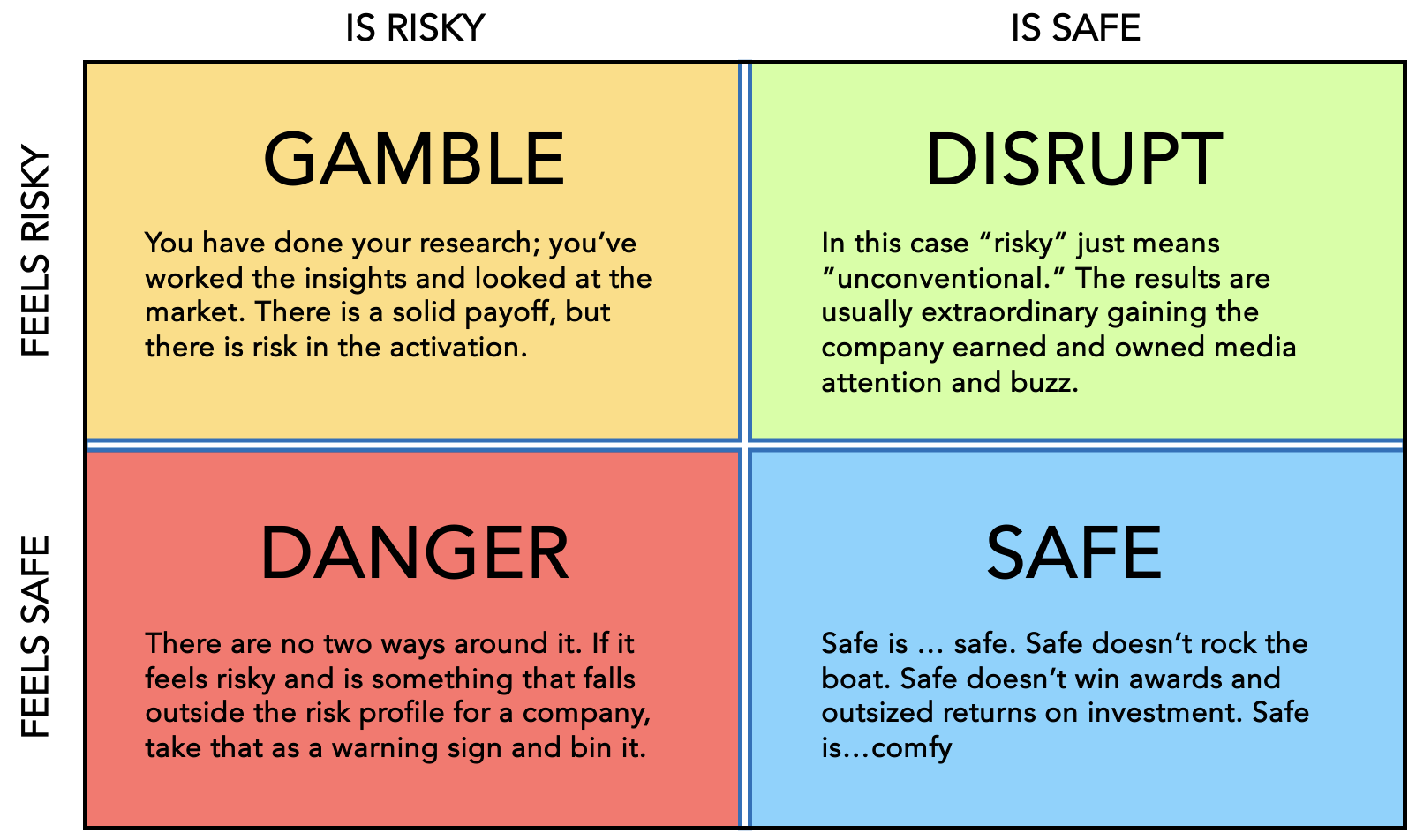
To state the obvious, risk is…well...risky. Businesses don’t like risk because they tend to assume the worst possible outcome, and in fairness, it has served them well. However, risk exists on a spectrum. There’s good risk, and there’s bad risk, they key is to know how to distinguish between the two and how to avoid bad risk.
Risk can be good, but it is also fickle. Knowing good vs. bad risk is an art, but one that is (perhaps) a little easier than you might think.
A key avenue to foster innovation is through the cultivation of a culture that encourages and supports creative risks. While the term "risk" might sound daunting, businesses that willingly venture into uncharted territories often reap substantial rewards.
Creative risks inherently push businesses out of their comfort zones, prompting employees to think outside the box. This fosters a culture of innovation, where individuals are encouraged to experiment, explore new ideas, and challenge existing norms. The ability to adapt and respond swiftly to changing market conditions is crucial in today's dynamic business environment, and creative risks serve as a catalyst for cultivating organizational agility.
Innovation driven by creative risks can set businesses apart from their competitors. When companies take calculated creative risks, they introduce novel products, services, or business models that capture the attention of customers. This differentiation not only attracts new clients but also retains existing ones by demonstrating a commitment to staying ahead of the curve.
A workplace that encourages creative risks empowers employees to feel a sense of ownership and agency in their roles. When individuals are given the freedom to explore new ideas without fear of retribution, it fosters a positive work environment. This, in turn, boosts employee morale, satisfaction, and engagement, creating a more productive and innovative workforce.
Creative risks involve a degree of uncertainty, and with uncertainty comes the opportunity for learning. Businesses that encourage taking risks foster a culture of continuous learning and adaptation. Even if a creative endeavor does not pan out as expected, the insights gained from the experience can be invaluable, contributing to the organization's overall knowledge base.
Taking creative risks often involves a deep understanding of customer needs and preferences. By actively seeking out and responding to customer feedback, businesses can tailor their innovative efforts to align with market demands. This customer-centric approach not only increases the likelihood of successful outcomes but also builds stronger, more lasting relationships with the target audience.
Organizations that shy away from creative risks may find themselves falling behind. Embracing a culture that values and encourages innovative thinking not only fosters a dynamic work environment but also positions businesses as industry leaders. The benefits of taking creative risks extend beyond immediate financial gains, contributing to long-term sustainability, adaptability, and success in an increasingly competitive global marketplace. Ultimately, the ability to balance calculated risks with strategic innovation is a hallmark of thriving, forward-thinking businesses.
Case Study: Domino’s Pizza - the turnaround

Let’s look at Domino’s pizza. Remember when Domino’s flat out said that its pizza was bad? Talk about risky business!
“Executives watch focus groups berate the product — “the sauce tastes like ketchup,” says one — and admit that in the past, their pizza had its failings. “That’s hard to watch,” says one Dominos exec with a lump in her throat. “When you first hear it, it’s shocking,” says another.”
But this was a turnaround of the company and from this position Domino’s effectively positioned itself to win while simultaneously lowering expectations. When the campaign went live the company’s fourth-quarter profit more than doubled, and since the campaign launched, Domino’s has grown from around $33/share to around $422 in 10 years at a CAGR of 29% per year.
From the launch of campaign, Domino’s Pizza (DPZ) has seen their share price soar at 29% CAGR.
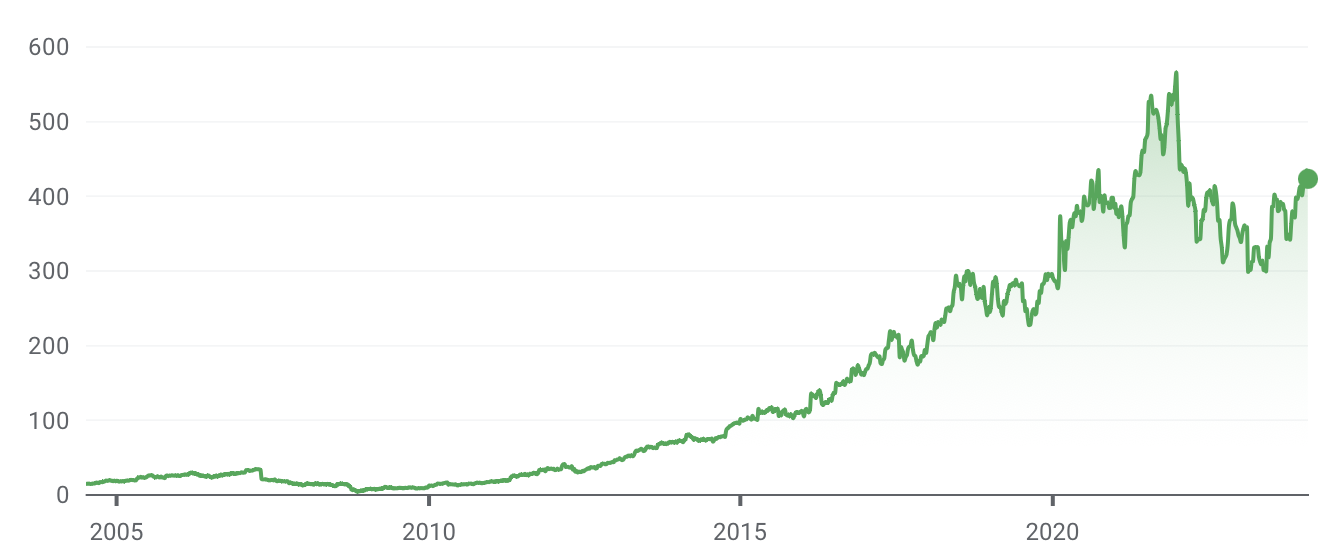
Full-term view of Domino’s Pizza (DPZ) stock price. Rubber really starts to hit the road after Domino’s launches its turnaround campaign.
There is no denying that Domino’s did something right about 10 years ago. They risked their brand’s reputation, operations, franchisees, and value on the fact that it could turn things around by simply stating that their product was bad.
I would imagine that there were many an executive leader inside the organization who could not find themselves onboard with an idea like this.
The agency that worked with Domino’s on their turnaround was Crispin Porter + Bogusky, stylized as CP+B (who had its own turnaround recently). Domino’s started their march to pizza delivery dominance by not only changing their pizza recipe with more fresh ingredients, but it also started innovating the method by which customers could get their pizza.
The company that pioneered the 30-minute or free guarantee in the 70s and 80s, and The Noid in the 90s, was now the company that—again—was risking it all to win customers back. Since embarking on their turnaround, Domino’s has helped cities fill pot holes so that the pizza doesn’t get too jostled while being delivered; a brilliant scheme that not only positions Domino’s as a brand that understands the issues of modern living, but also is able to do some good in the communities that they serve.
Domino’s has unleashed the Chevy Bolt as their updated delivery vehicles running fully electric, another ‘good for you and good for the planet’ initiative. Not only do these vehicles serve multiple purposes of being eye catching advertisements for the product, there are significant savings to be gained for corporations that switch to green delivery.
Earlier in the decade you could immediately reorder your favorite pizza by tweeting a pizza emoji (🍕) to the Dominos handle. This was a handy way for the brand to gain incremental orders that otherwise would have been lost if not for the frictionless method of ordering. Today, Domino’s is trying to “pinpoint” your location so that you can get your pizza delivered right to the park, beach, or rest stop - no addresses required.
Finally, to cap off all the says that Domino’s can deliver pizza to you, welcome Domino’s autonomous delivery robot. In a partnership that is good for both brands, Dominos and Nuro joined forces to deliver pizza based on Nuro’s R2 robot.

Ad Agencies 101: What is Brand Planning?
Brand Planners serve as the linchpin between consumer insights and strategic communication. By deciphering the complexities of consumer behavior, they contribute to campaigns that not only capture attention but also forge enduring connections between brands and consumers.
A Brand Planner, interchangeably known as a Strategist, Strategic Planner or Account Planner, plays a pivotal role in advertising agencies by bridging the gap between consumer understanding and strategic communication. The primary objective is to unravel the intricacies of consumer behavior, market trends, and competitive landscapes to inform the development of impactful advertising campaigns.
Responsibilities of a Brand Planner:
Consumer Research and Insights: Brand Planners conduct comprehensive research to unearth consumer preferences, motivations, and behaviors. This involves utilizing various methodologies, including surveys, interviews, and data analysis, to gather insights that inform strategic decisions.
Target Audience Profiling: Brand Planners create detailed profiles of target audiences, considering demographics, psychographics, and cultural nuances. This results in a nuanced understanding of diverse consumer segments, facilitating tailored communication strategies.
Competitor Analysis: Strategic positioning requires a keen analysis of competitors. Brand Planners identify white spaces, differentiators, and potential areas for innovation to guide effective brand strategies.
Communication Strategy Development: Armed with consumer insights, Brand Planners collaborate with creative teams to craft communication strategies that resonate with the target audience. They ensure brand messaging aligns with consumer values and aspirations.
Briefing and Collaboration: Serving as a liaison between clients and creative teams, Brand Planners develop comprehensive briefs, offering clear direction based on consumer insights. This fosters collaboration with creative professionals to bring strategic visions to life.
Brand Planners, acting as the backbone of successful advertising campaigns, ensure that creative endeavors are rooted in consumer understanding. Their role is critical in fostering brand loyalty, maximizing market share, and achieving long-term brand success.
Brand Planners serve as the linchpin between consumer insights and strategic communication. By deciphering the complexities of consumer behavior, they contribute to campaigns that not only capture attention but also forge enduring connections between brands and consumers. Recognizing the significance of the unified Brand Planner role is fundamental for advertising agencies navigating the intricacies of today's dynamic market.

The Art of Interview Prep and Staying Memorable
Being prepared for job interviews and leaving a memorable impression requires a combination of research, practice, and authenticity. By investing time in these areas, you not only increase your chances of success but also position yourself as a candidate who is serious about the opportunity.

The trouble with being too tall…nothing fits.
Not even the frame
Not everyone is 6’6” like me. I have found that my height is a curse for buying pants in stores, but a wonderful attribute to remain memorable with recruiters and hiring managers. In this new age of increased remote jobs and interviews my height plays no role and, thus, I need to find other ways to break through and remain memorable.
Job interviews are often the make-or-break moments in our professional lives. Being adequately prepared and leaving a lasting impression can significantly impact your chances of landing the dream job. In this article, we'll explore the importance of preparation and the key elements that make you memorable to potential employers.
Do your research, know the business
Before heading to any interview, it's crucial to research both the company and the role you're applying for. Familiarize yourself with the company's values, goals, and recent achievements. Understand the specific responsibilities of the job and how your skills align with them. This not only demonstrates your genuine interest but also helps you tailor your responses to showcase your suitability for the position.
What’s YOUR pitch
Craft a compelling narrative that highlights your professional journey, skills, and achievements. Be ready to articulate your experiences in a way that demonstrates your value to the potential employer. A well-crafted personal story not only makes you memorable but also helps the interviewer connect with you on a deeper level.
Practice, rehearse, and get feedback
Rehearse common interview questions to build confidence and articulate your responses effectively. Consider practicing with a friend or in front of a mirror to refine your delivery and body language. This preparation will help you respond more naturally during the actual interview, making you stand out as a confident and composed candidate.
Look…“good”
First impressions matter, and your attire plays a crucial role in how you are perceived. Choose an outfit that aligns with the company culture while maintaining a professional look. A well-groomed appearance demonstrates your respect for the opportunity and your understanding of workplace norms. And, if in doubt, ask!
You know your unique value proposition—share it!
Identify what sets you apart from other candidates and ensure it shines during the interview. Whether it's a unique skill, experience, or perspective, make sure to emphasize what makes you an exceptional fit for the role. This distinctiveness will make a lasting impression on the interviewer.
Connect as a human, have meaningful conversations
An interview is not just an opportunity for the employer to evaluate you; it's also a chance for you to assess whether the company aligns with your career goals and values. Engage in thoughtful conversations about the company's culture, future projects, and your potential contributions. Demonstrating genuine interest in the organization will leave a positive and lasting impact.
Follow up and show gratitude
After the interview, send a thank-you email expressing your gratitude for the opportunity and reiterating your enthusiasm for the position. This small gesture not only demonstrates professionalism but also keeps you fresh in the interviewer's mind. No need to make it a long and in-depth note, but hitting on 2-3 salient points from the conversation will be a nice way to job memories and recall. If you are unable to get the interviewer’s email, always feel free to reach out to your recruiter, often they are more than happy to forward a note.
Being prepared for job interviews and leaving a memorable impression requires a combination of research, practice, and authenticity. By investing time in these areas, you not only increase your chances of success but also position yourself as a candidate who is serious about the opportunity. Remember, it's not just about getting the job; it's about finding the right fit for your skills and career aspirations.